
 Pin it
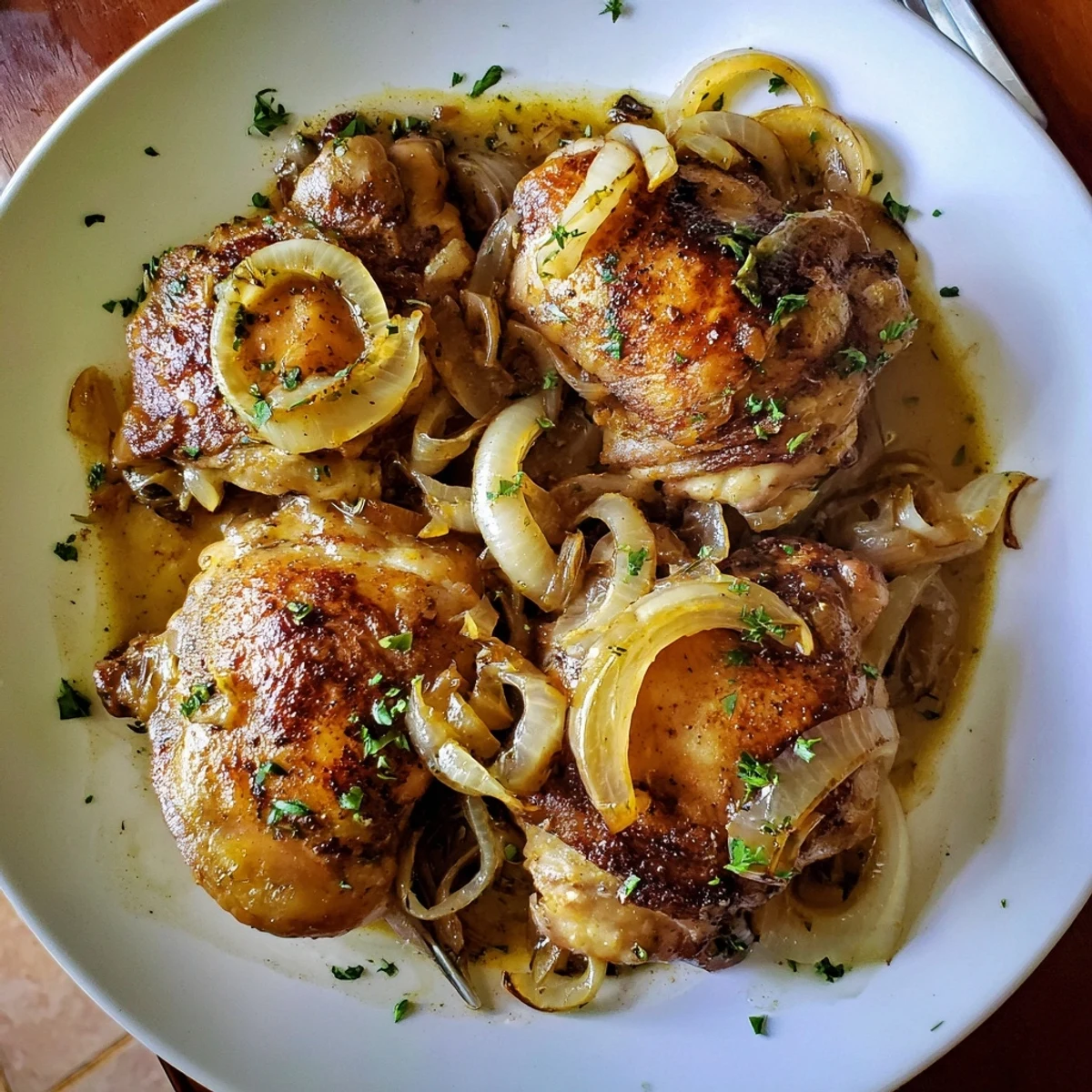
 Season and sear bone-in, skin-on chicken thighs until golden, then set aside. Sauté thinly sliced onions and garlic in the same pan, sprinkle flour, and gradually whisk in chicken stock to form a glossy, onion-rich gravy. Return the thighs, cover, and simmer 25–30 minutes until tender. Finish with butter and chopped parsley; serve over mashed potatoes, rice, or buttered noodles for comforting, hearty results.
The first time those rich aromas of onion and chicken hit my kitchen, I was simply trying to warm up on a chilly evening. There was a slow, mesmerizing sizzle as the chicken browned in the pan and I remember glancing over to see my neighbor peeking in, nose first, like she’d caught a secret waft from the window. Meals like this seem to transform the whole mood of a house. Suddenly, the cat is underfoot and everyone finds a reason to wander into the kitchen.
Once, I made these smothered chicken thighs for a last-minute Sunday lunch, and as soon as I set out the bubbling pan, my friends started improvising reasons to “taste test” before we even sat down. Someone dunked a heel of bread straight in the skillet—it was too tempting to resist. Even my notoriously picky cousin went in for seconds, proclaiming ‘I don’t even like onions, but…’
Ingredients
- Chicken thighs: Bone-in, skin-on pieces turn lusciously juicy and that crackling skin is worth every extra minute of searing—patting them dry is key for the best golden crust.
- Yellow onions: Slicing them extra thin helps them melt into the gravy for a subtle sweetness that makes the dish shine.
- Garlic: Four cloves may feel bold, but their gentle warmth mellows beautifully as they cook with the onions.
- Chicken broth: Use a good, flavorful broth—homemade if you have it, or the low-sodium carton if you don’t.
- All-purpose flour (or gluten-free flour): Just enough to thicken the gravy—sift it over the onions for an even blend.
- Olive oil and unsalted butter: The combo prevents burning and leaves the kitchen smelling like you spent hours at the stove.
- Smoked paprika: Adds a deep, comforting earthiness—a small teaspoon transforms the gravy.
- Dried thyme: The herbal backbone to keep the flavors balanced.
- Salt and black pepper: Never underestimate a generous seasoning at the start—it builds a savory base that carries through each bite.
- Fresh parsley (optional): That last sprinkle lifts the whole dish both visually and in taste.
Instructions
- Season the chicken:
- Lay the thighs out and sprinkle them generously with salt, pepper, smoked paprika, and thyme, gently rubbing the spices into the skin for even coverage.
- Heat the fats:
- Add olive oil and butter to a large skillet or Dutch oven over medium-high heat; swirl until the butter just melts into the oil, releasing a nutty fragrance.
- Sear the chicken:
- Place each thigh skin-side down in the hot pan and listen for that satisfying sizzle—let them brown undisturbed for about six minutes per side, then move them to a warm plate.
- Sauté the onions and garlic:
- Drop the onions into the same skillet, scraping up those golden leftover bits while they soften and begin to caramelize, then add the garlic for a final minute of warmth.
- Stir in the flour:
- Dust the flour evenly over the onions and stir well, toasting for just a minute or two until the raw flour smell disappears.
- Make the gravy:
- Gradually pour in the chicken broth while whisking smoothly to dissolve the flour and prevent any lumps—let it come to a gentle simmer.
- Return the chicken:
- Nestle the seared thighs skin-side up back into the pan, spooning plenty of oniony gravy over them.
- Simmer gently:
- Reduce the heat and cover; let the chicken bubble softly for 25–30 minutes so the meat turns perfectly tender and the gravy thickens into a velvety sauce.
- Taste and finish:
- Give the gravy a final taste—add more salt or pepper as needed before serving up with an extra gravy drizzle and fresh parsley if you like.
 Pin it
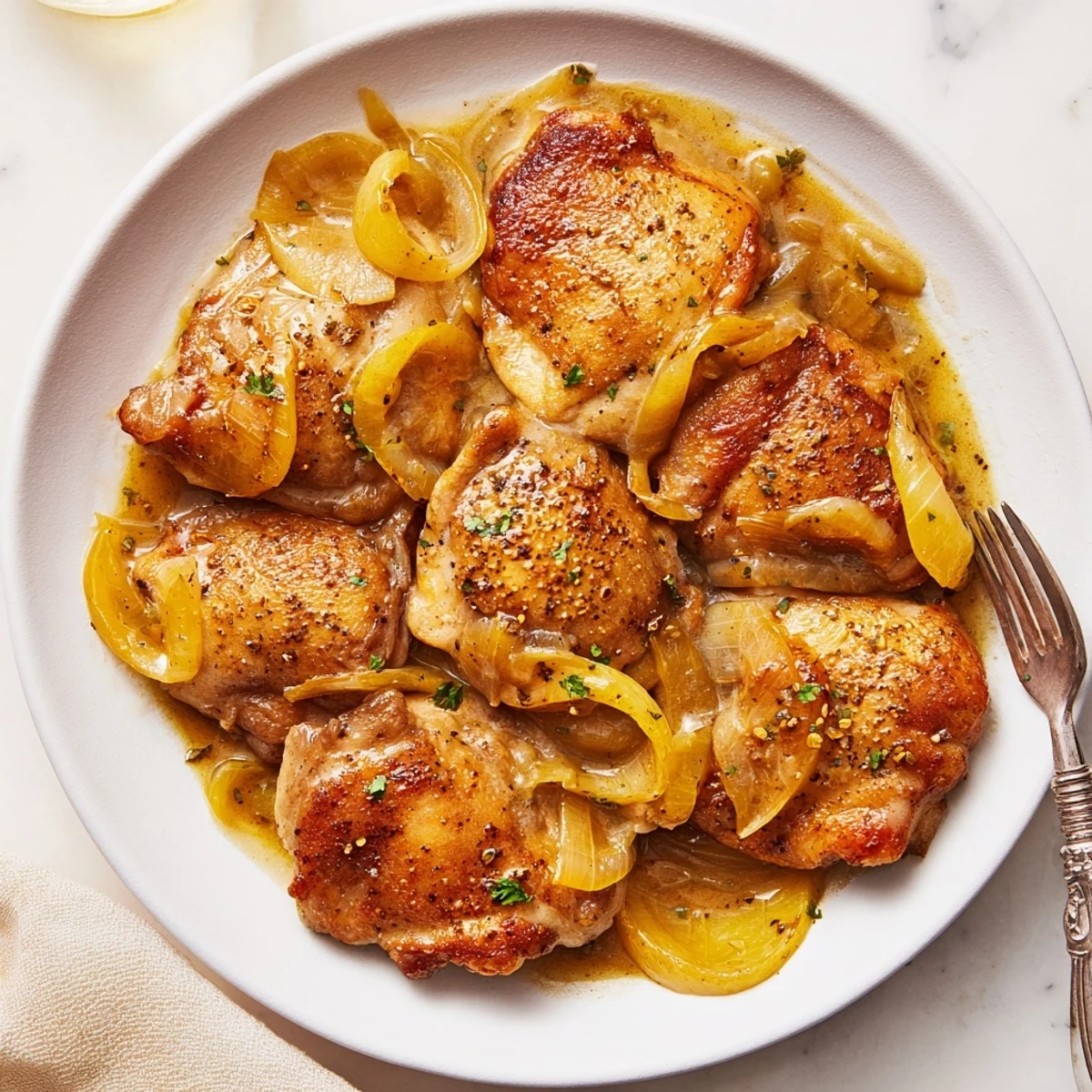
 One night, long after dinner, I found myself in the kitchen scooping out leftover onions straight from the pan, absentmindedly savoring their sweetness while chatting with a friend about nothing in particular—the dish had become a warm backdrop to the easiest kind of company.
Getting the Most Flavor Out of Your Chicken
Letting your chicken rest after searing before it goes back in helps keep the juices where they belong—inside the meat instead of leaking into the pan. When the thighs go back into the gravy, they soak up all that oniony goodness without losing their tenderness.
Make It Even Cozier
If you have a splash of white wine on hand, try deglazing the skillet before adding the broth; it lifts all those savory browned bits and deepens the final flavor in ways that still surprise me. Swapping in a handful of mushrooms or bell peppers with the onions also sneaks in extra vegetables without any fuss.
Serving and Sides Everyone Loves
Mashed potatoes are an obvious partner for soaking up the gravy, but don’t overlook buttered rice or thick slices of rustic bread for mopping the pan clean at the end. Around here, there’s never a drop left. My only warning: make sure to serve this straight from the skillet if you want to see faces light up.
- Warm the serving plates if you can—it keeps the gravy silky longer.
- Use fresh parsley at the end for a pretty color pop and bright finish.
- Let everyone spoon their own extra gravy—it disappears fast.
 Pin it
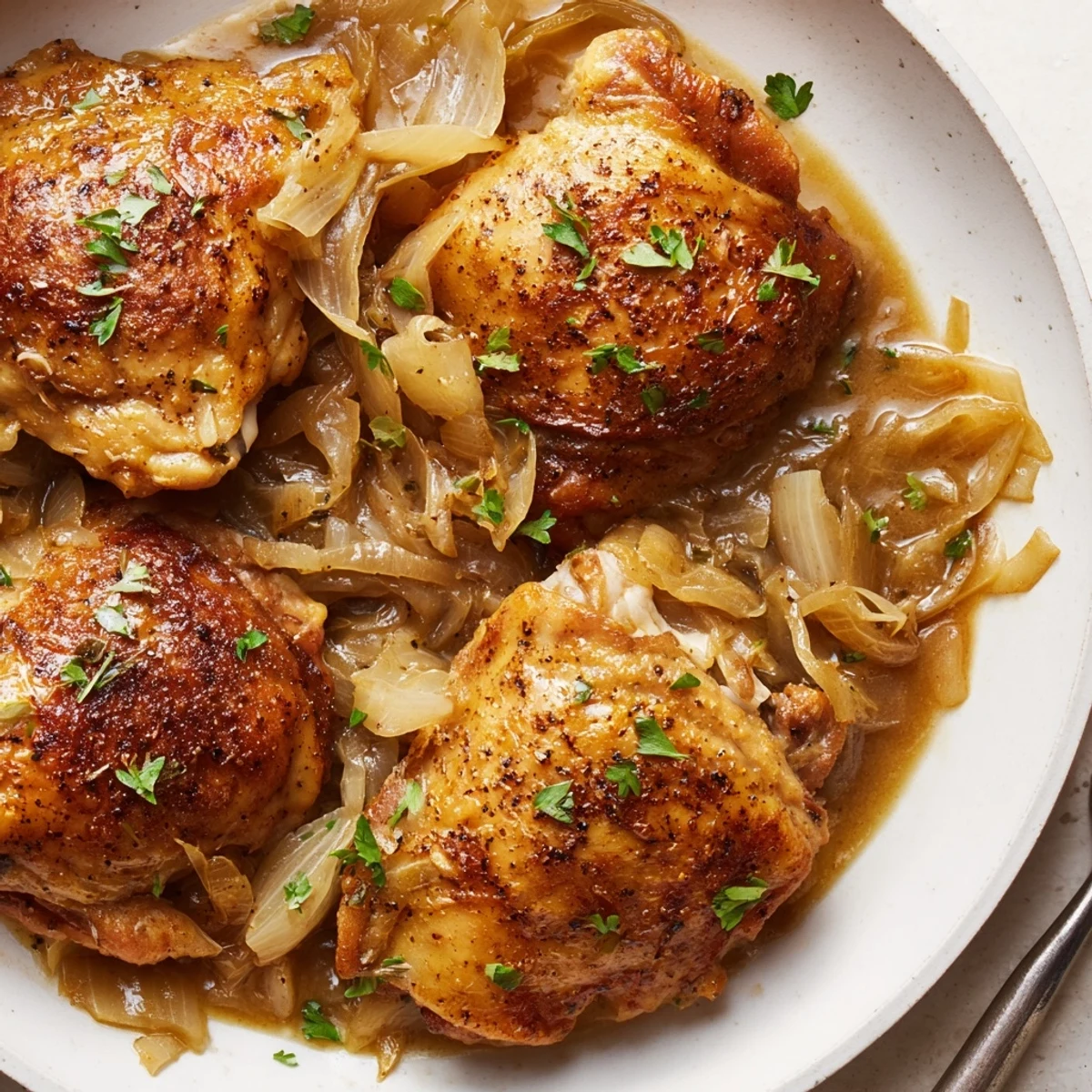
 Even simple weeknights feel special when you bring this to the table. There’s just something about sharing a dish that simmers quietly and fills the whole house with comfort.
Recipe Questions & Answers
- → How do I get crisp skin before simmering?
-
Pat the thighs dry and sear skin-side down in hot oil and butter without moving them until deeply golden. This renders fat and creates a barrier so skin stays flavorful before finishing in the gravy.
- → How can I thicken the onion gravy?
-
After cooking the onions, sprinkle flour and cook 1–2 minutes to remove the raw taste, then whisk in warm stock gradually. Simmer uncovered briefly to concentrate and reach desired thickness.
- → Can I make this gluten-free?
-
Yes. Use a gluten-free all-purpose flour or a cornstarch slurry (mix 1 tbsp cornstarch with cold water) to thicken the gravy, and verify the broth is gluten-free.
- → Should I deglaze the pan, and with what?
-
Deglazing is recommended for deeper flavor. A splash of dry white wine or a bit of extra stock lifts browned bits from the pan before adding the rest of the broth.
- → How long can leftovers be stored and how to reheat?
-
Store cooled portions in an airtight container in the refrigerator for up to 3 days. Reheat gently on the stovetop over low heat, stirring occasionally, or warm in the oven covered to preserve moisture.
- → What side dishes pair best with the onion gravy?
-
Classic pairings include creamy mashed potatoes, steamed rice, buttered noodles, or crusty bread to sop up the gravy. Roasted or sautéed vegetables also complement the dish.